NOXATRAPTECHNOLOGIES
OBSERVE THE NIGHT. UNDERSTAND THE CHANGE.

The night is quiet.
Its data isn’t.

Making nature’s nocturnal activity visible. A new approach to biodiversity and agricultural monitoring through autonomous observation, AI and scientific validation.

More than
a single device.

Hardware and software layers designed to work together. Each product addresses a different part of the same challenge.

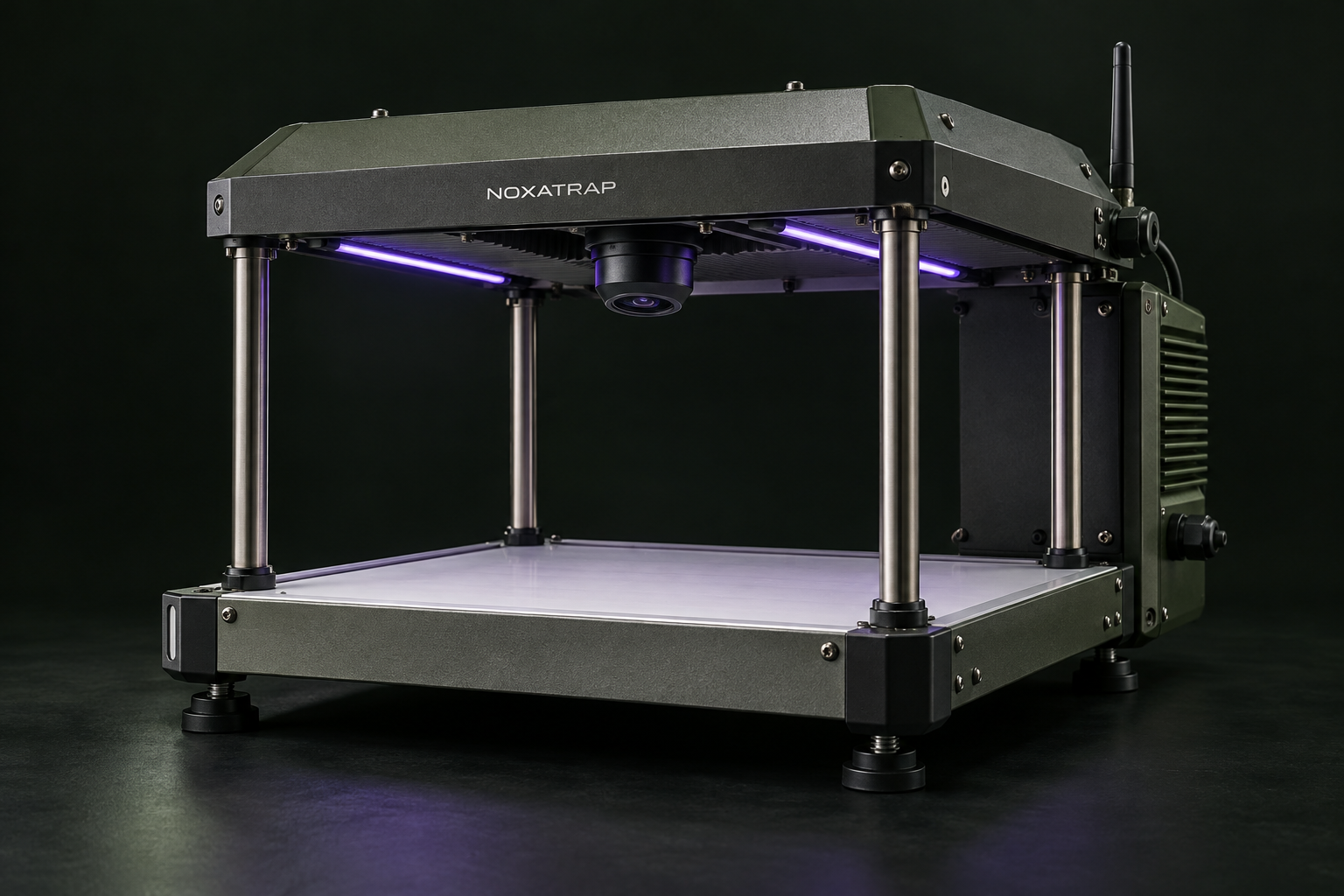
NOXATRAP Node prototype with a protective canopy, downward-facing camera, observation surface and electronics enclosure
NOXATRAP ONE / NODE
YOUR EYES IN THE FIELD

NOXATRAP One / Node

An autonomous observation station designed for scheduled image capture and environmental data collection. Light-based observation and agricultural pheromone traps are treated as separate field configurations.

  • Planned camera and lighting architecture
  • Power and connectivity designed around field conditions
  • Linking images to timestamps and station records

Observation in the field.
Technology at every layer.

NOXATRAP is being developed as an integrated system, from imaging hardware to expert validation. Each layer is designed to preserve the source and context of every observation.

NOXATRAP Node prototype with a protective canopy, downward-facing camera, observation surface and electronics enclosure
ImagingAI analysisConnected data
01

Camera and controlled lighting

Scheduled image capture is planned using a camera and lighting directed at the observation surface. Light-based observation for Bio and target-specific pheromone trap imaging for Agro are being developed as separate field configurations.

02

Computer vision and species suggestions

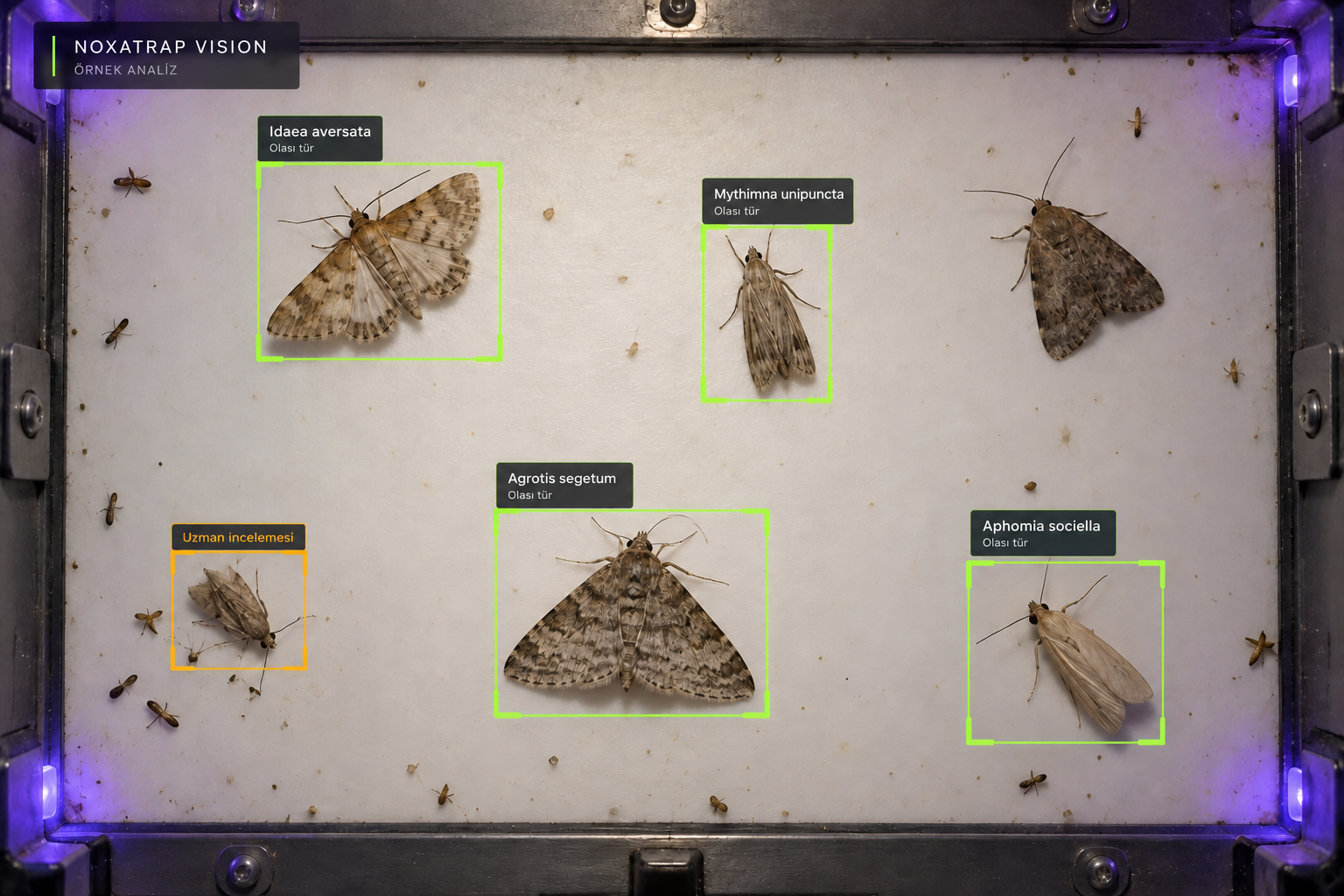
The Vision layer is designed to assess image quality, detect insects and suggest possible taxa. Records without sufficient evidence will remain uncertain or be referred for expert review.

03

Environmental data and field power

Images will be linked to timestamps, stations and environmental records such as temperature. Solar panel and battery options will be evaluated against observation schedules and field conditions, with runtime measured in field studies.

04

Connectivity, validation and data platform

The aim is to transfer station records to a shared platform, keeping original images, model versions and expert revisions together. Connectivity will be selected for each field setting. In Agro, observation series, temperature and suitable phenology models will support alerts for experts.

Awareness for agriculture.
Knowledge for nature.

One observation infrastructure, two different research questions. Explore our approach to agricultural early warning and biodiversity monitoring.

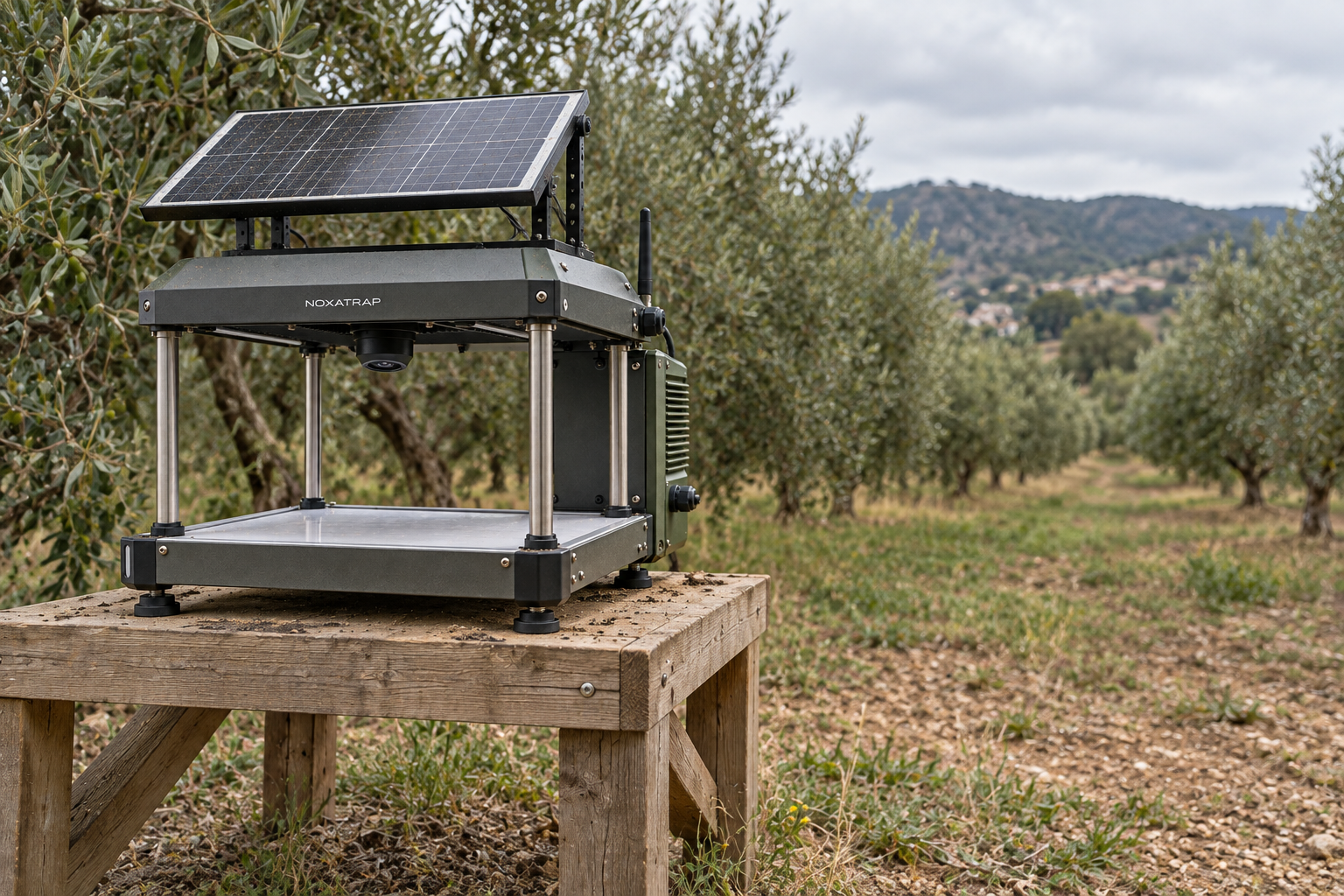
Solar-powered NOXATRAP device installed beside an orchard
NOXATRAP AGRO / OUR APPROACH

From a single field to a regional
early warning network.

We are developing an approach to agricultural pest monitoring that considers observations collected over time and across locations, rather than relying on a single record.

Connecting field observations

NOXATRAP Agro starts with connecting devices across fields, vineyards and orchards to a shared data network. We plan to link images from target-specific pheromone traps to stations, dates and environmental conditions. Observations from different plots can then be examined on a common timeline, with record quality and sampling conditions taken into account.

Computer vision will provide an initial assessment by highlighting possible target pests in images. Uncertain records will be referred for expert review, and model suggestions will remain separate from validated observations. Trap counts alone will not be presented as a definitive measure of pest density across an entire area.

When does a change need attention?

The planned early warning approach will consider changes in observation series alongside temperature records, accumulated degree-days and species-specific phenology models. We aim to help experts assess whether an increase at a station reflects a new flight period, local conditions or a change in sampling.

Alerts are designed to highlight when a closer look at the field may be needed. The system will present changes requiring review and the reasons behind them, rather than issuing pesticide instructions or definitive damage forecasts. The suitability of models for each region, species and trap configuration will be evaluated through field studies.

Asking the right field questions

In our initial collaborations, we aim to define target species, device placement, sampling frequency and expert validation together. Connectivity, power continuity and record quality will be assessed alongside biological observations. The value of early warning will depend on real field needs and local validation.

Cydia pomonellaLobesia botranaTuta absoluta

These species are examples of target monitoring scenarios.

Design a field study with us ↗
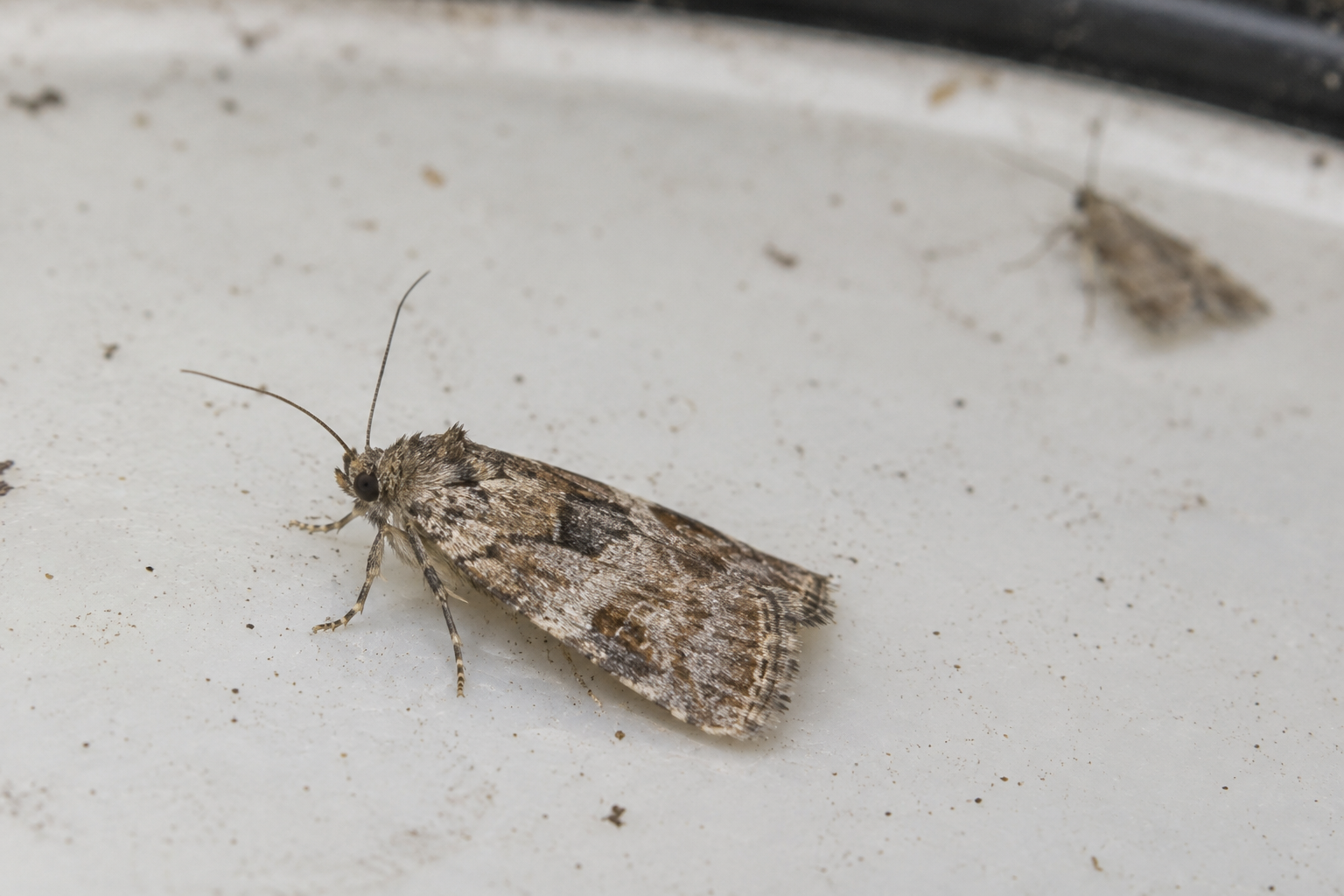
Close-up view of moths on an observation surface
NOXATRAP BIO / OUR APPROACH

From night observations
to ecological questions.

An image of a moth is an observation record. Its research value depends on where, when and under what conditions it was captured.

More than a species list

NOXATRAP Bio is being developed as research infrastructure bringing Lepidoptera observations together across time and space. Our aim extends beyond assigning names to images: we want a data workflow that helps track seasonal records, differences between stations and changes requiring review.

Station operating time, recording intervals, image quality and environmental conditions will form part of this workflow. We also aim to make data gaps visible. A period without observations is different from a period when a device was not operating, so sampling coverage must be documented separately.

Seeing uncertainty alongside the model

Our planned modelling approach examines time series alongside environmental and sampling variables suited to the research question. A seasonal curve or a difference between stations will not, on its own, be presented as evidence of ecological change. Model assumptions, data coverage and uncertainty will remain visible.

An AI-suggested species name will not be treated as an expert-validated record. When image evidence is insufficient, broader taxonomic classifications or unidentified records will remain available. Traceable expert revisions are intended to support later reassessment.

Research data that can be revisited

Collaborations with research teams will define sampling protocols, validation criteria and reporting needs from the outset. We aim to export images, observation metadata and review status together, creating records that can be used to explore different questions.

Bio aims to help researchers ask better questions about changes in nature. Documenting field conditions and sampling bias will be central to this approach.

Discuss a research collaboration ↗

From observation to knowledge.
From knowledge to the future.

Founded in 2026, NOXATRAP Technologies is a technology venture developing autonomous monitoring devices and data technologies for agricultural companies, researchers, universities and public institutions.

Our hardware, AI and connected station infrastructure is intended for a broad range of uses, from pest monitoring and early warning for agriculture to biodiversity monitoring and conservation research. Field needs and scientific validation guide our design.

We work with Claude AI models across product development, analysis, modelling and the development of early warning systems. We use these models to support research, software development and data interpretation, with scientific validation and expert assessment at the heart of our process.

OUR MISSION

Making nature easier to understand,
and knowledge easier to access.

Our mission is to turn observations from natural habitats and farmland into reliable, traceable and meaningful knowledge. Through autonomous devices and AI-assisted analysis, we aim to improve observation continuity and support expert assessment, contributing to sustainable agriculture and biodiversity conservation.

The next observation,
in your field.

We want to define study objectives together with researchers, agricultural specialists, growers and technology partners.

Emailinfo@noxatrap.com ↗
Address

61st Street, Beylikdüzü
34520 Istanbul, Türkiye

Collaborate with us

Tell us about your interests and field needs. Send us a message using the form below. Messages are forwarded to info@noxatrap.com through FormSubmit.